THE CHALLENGE: Nigeria's social protection programmes can only reach the poor and vulnerable if the country knows who they are and where they live. Before the National Social Register, that information sat in separate state-level lists, on paper and in spreadsheets, collected to different standards and impossible to reconcile. A household could be counted twice, or not at all, and nobody could prove which.
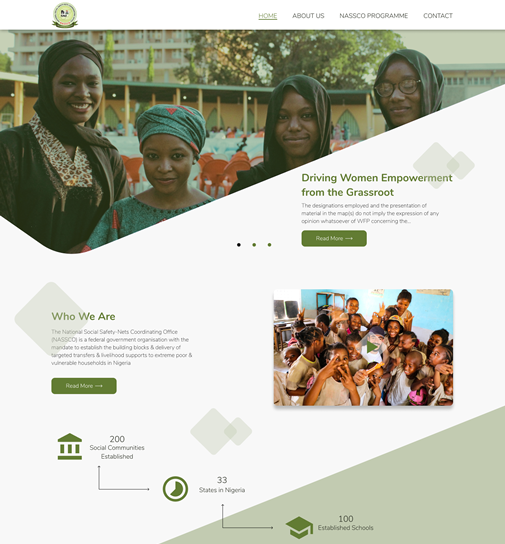
WHAT WE BUILT: The National Social Safety-Nets Coordinating Office (NASSCO) adopted I-PIN, built on dev1kit (ODK), for the collection and management of the register. Enumerators capture households in the field; the system validates as it goes, holds the records centrally, and reports on coverage state by state.
HOW IT WORKS
Field enumeration against one national standard, so every state's data means the same thing
Validation at the point of capture rather than in a clean-up exercise months later
Records held centrally, with duplicates visible instead of hidden across separate lists
Coverage and progress reporting by state and local government
Controlled access, so who may see a household's details is a decision, not an accident
THE OUTCOME: Tens of millions of poor and vulnerable individuals across the 37 states were captured and managed in a single register - the foundation the country's social protection programmes, including cash transfer and grant schemes, now target from.
Figures quoted in different programme documents vary; the position above is stated conservatively on purpose.


It’s impossible to achieve effective business management in the absence of adequate and accura...

PROBLEM STATEMENT A jewelry store faces a tremendous amount of task of mainta...